
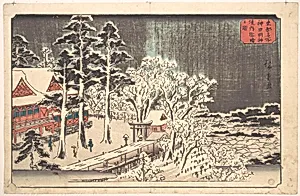
東都名所 神田明神境内雪晴之図|“Clear Weather after Snow in the Precincts of the Kanda Myōjin Shrine” (Kanda Myōjin keidai yukibare no zu), from the series Famous Places in the Eastern Capital (Tōto meisho)
1840–42
Medium
Woodblock print; ink and color on paper
Dimensions
9 15/32 x 14 3/5 in. (24.1 x 37.1 cm)
Classification
Prints
Culture & Period
Japan · Edo period (1615–1868)
Department
Asian Art
Museum
Metropolitan Museum of Art, New York, NY
Credit
Purchase, Joseph Pulitzer Bequest, 1918
Accession Number
JP627
Rights
Public Domain
Tags
Art Historical Context
Utagawa Hiroshige’s “Clear Weather after Snow in the Precincts of the Kanda Myōjin Shrine” captures a serene winter moment at one of Edo’s most revered Shinto sites. Created between 1840 and 1842 as part of the series *Famous Places in the Eastern Capital*, the woodblock print showcases the artist’s masterful ability to evoke atmosphere through subtle color gradations and crisp lines. Snow blankets the shrine grounds and surrounding trees, while the clearing sky hints at the fresh, bright light that follows a snowfall. Hiroshige, a leading figure in the ukiyo-e tradition, specialized in landscape prints that brought the changing seasons and celebrated locales of Edo to a broad audience. The medium—ink and color on paper produced through meticulous woodblock carving—allowed these scenes to be reproduced affordably, making art of daily beauty accessible beyond the elite. Here, the Kanda Myōjin precincts appear tranquil yet alive, with modest houses and bare trees framing the shrine’s distinctive architecture. This print reflects the Edo period’s deep appreciation for nature’s fleeting moods and the cultural importance of meisho, or “famous places.” Visitors today can still sense the quiet wonder Hiroshige preserved, a timeless reminder of how ordinary weather transforms familiar landscapes into moments of quiet poetry.
About the Artist
Utagawa Hiroshige · 1826–1869
Utagawa Hiroshige (1797–1858), born Andō Tokutarō, was the last great master of Japanese ukiyo-e woodblock printmaking and one of the most influential landscape artists in history. Born in Edo (modern Tokyo) into a low-ranking samurai family serving as fire wardens, Hiroshige transformed landscape printmaking into a poetic meditation on nature, weather, and everyday life. His revolutionary approac...