
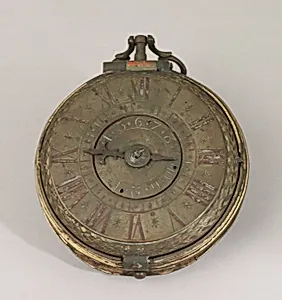
Clock-watch
Unknown Artist
17th–18th century
Medium
Brass-gilt, steel
Dimensions
Diameter: 3 7/8 in. (9.8 cm)
Classification
Horology
Culture
German
Department
European Sculpture and Decorative Arts
Museum
Metropolitan Museum of Art, New York, NY
Credit
Bequest of Thomas Egleston, 1900
Accession Number
00.12.5
Rights
Public Domain
Art Historical Context
Step into the intricate world of 17th18th century German horology with this exquisite *Clock-watch*, a compact marvel measuring just 3 7/8 inches (9.8 cm) in diameter. Crafted from-gilt and steel by an unknown artist, this timepiece exemplifies the era's blend of functionality and luxury. During the Baroque and early Enlightenment periods, German clockmakers were renowned for their precision engineering, producing pocket watches that allowed the elite to track time on the go—a novelty as mechanical innovations made reliable portability possible. The medium highlights masterful techniques: brass-gilt provided a shimmering gold-like finish for aesthetic appeal and corrosion resistance, while steel ensured durable, intricate gears within. As a highlight in the Metropolitan Museum of Art's European Sculpture and Decorative Arts collection (bequeathed by Thomas Egleston in 1900), it reflects the cultural prestige of horology in Germany, where guilds fostered exceptional craftsmanship. Owning such a watch signaled wealth and sophistication, bridging art and science in everyday life. Imagine slipping this elegant heirloom into your pocket— a testament to human ingenuity that turned timekeeping into wearable art.