
Clove boiler
1780
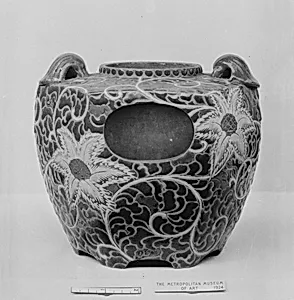
Medium
Faience decorated in enamels (Kyoto ware)
Dimensions
H. 6 3/4 in. (17.1 cm); Gr. W. 7 3/8 in. (18.7 cm)
Classification
Ceramics
Culture & Period
Japan · Edo period (1615–1868)
Department
Asian Art
Museum
Metropolitan Museum of Art, New York, NY
Credit
Gift of Mrs. V. Everit Macy, 1923
Accession Number
23.225.247
Rights
Public Domain
Tags
Art Historical Context
Nestled in the Metropolitan Museum of Art's Asian Art collection, *Clove Boiler* by Rakutozan exemplifies the refined artistry of Edo-period Japan (1615–1868). Created in 1780, this faience piece from Kyoto ware measures just 6 3/4 inches high and 3/8 inches wide, making it a delightful, intimate object for domestic use. During the Edo era, a time of peace cultural flourishing, Kyoto potters like Rakutozan everyday ceramics into works of beauty, blending functionality with aesthetic grace. Crafted from tin-glazed earthenware and adorned with vibrant enamels, the boiler features delicate floral motifs—a hallmark of Kyoto ware's overglaze technique, where colorful enamels were fired at lower temperatures to achieve luminous, intricate designs. This method allowed for vivid depictions of flowers, evoking nature's ephemerality and adding poetic elegance to a practical vessel. Clove boilers like this were used to simmer aromatic cloves, releasing fragrant steam for perfuming rooms or enhancing tea ceremonies, reflecting Japan's deep appreciation for sensory harmony. A gift to the Met in 1923 from Mrs. V. Everit Macy, this piece captures the Edo period's fusion of utility and artistry, inviting visitors to imagine its gentle warmth filling a serene Japanese home centuries ago.