
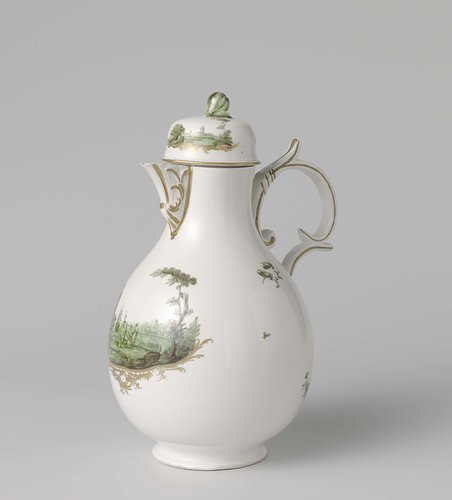
Coffee pot
c. 1759 - c. 1771
Medium
painting technique
Dimensions
23
Rights
Public Domain
About this artwork
height 23 cm
Art Historical Context
This elegant coffee pot, crafted by the Weesper porinfabriek around 9–1771, at a graceful 23 tall, embodying the refined of 18th-century porcelain production. The Weesp factory, located near Amsterdam, was a key player in the Netherlands' faience and soft-paste porcelain industry, emerging during a time when European makers sought to rival expensive Chinese imports. Coffee pots like this one were not just functional vessels but symbols of emerging middle-class sophistication, as coffee drinking swept through Dutch society in the Enlightenment era. The pot's medium highlights a "painting technique," likely referring to the intricate overglaze enameling or underglaze decoration typical of Weesp wares. These methods allowed artisans to apply vibrant colors and motifs—often floral or chinoiserie-inspired—fired at low temperatures to create durable, glossy finishes. Such techniques democratized luxury, making porcelain accessible beyond royalty and reflecting the Dutch ingenuity in blending functionality with artistry. As a snapshot of cultural exchange, this coffee pot captures the vibrancy of the Dutch Golden Age's twilight, where global trade fueled local innovation. Visitors, imagine sipping from it amid Amsterdam's bustling cafés— a perfect blend of utility and elegance!