
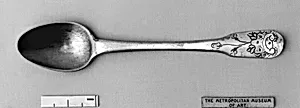
Coffee spoon
mid-18th century
Medium
Silver
Dimensions
Length: 4 3/4 in. (12.1 cm)
Classification
Metalwork-Silver
Culture
German, Stade
Department
European Sculpture and Decorative Arts
Museum
Metropolitan Museum of Art, New York, NY
Credit
Gift of Mrs. Samuel P. Avery, 1897
Accession Number
97.2.88
Rights
Public Domain
Art Historical Context
Nestled in the Metropolitan Museum of Art's European Sculpture and Decorative Arts, this delicate coffee spoon exemplifies the refined craftsmanship of mid-18-century German silversmith. Crafted by Johann Christian Kessler Stade—a prosperous Hanseatic town in northern Germany—the spoon measures a dainty 4 3/4 inches (12.1 cm) long and is made of gleaming silver. Donated in 1897 by Mrs. Samuel P. Avery, highlights the era's blend of functionality and artistry in everyday tableware. During the Rococo period, coffee emerged as a fashionable beverage among Europe's elite, prompting the creation of specialized silver utensils like this one. Silversmiths like Kessler employed skilled techniques such as hammering, chasing, and polishing to produce objects that were both practical for stirring aromatic brews and symbols of social refinement. Stade's guild traditions ensured high standards, making such pieces coveted heirlooms that bridged domestic life and luxury. Though modest in scale, this spoon offers a window into 18th-century material culture, where silver metalwork reflected economic vitality and cultural exchange in the German states. Visitors can appreciate how Kessler's work transformed a simple tool into a testament to enduring elegance.