
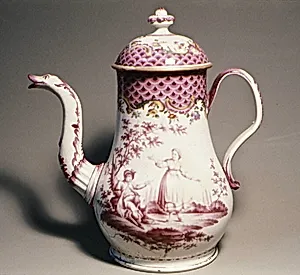
Coffeepot
Unknown Artist
ca. 1760–65
Medium
Salt-glazed stoneware, with polychrome enamel
Dimensions
Height: 8 3/4 in. (22.2 cm)
Classification
Ceramics-Pottery
Culture
British, Staffordshire
Department
European Sculpture and Decorative Arts
Museum
Metropolitan Museum of Art, New York, NY
Credit
Gift of Mrs. Russell S. Carter, 1945
Accession Number
45.12.63a, b
Rights
Public Domain
Tags
Art Historical Context
This elegant coffeepot, crafted 1760–65 in Staffordshire,, exemplifies the vibrant ceramic tradition of the British potteries during the mid-18th century. from salt-glazed stone—a durable, practical alternative to fragile porcelain—the piece stands at 8¾ inches tall, perfect for serving the increasingly popular hot beverage of coffee in genteel households. Staffordshire factories, like those in Stoke-on-Trent, revolutionized pottery production at this time, blending industrial innovation with artistic flair to create affordable luxury goods for a growing middle class. Theeepot's surface is enlivened by polychrome enamel, a technique where colorful overglaze pigments are fired at low temperatures to add vivid hues of blue, green, yellow, and red. This decoration likely features women amid trees, evoking pastoral scenes that celebrated nature and leisure—themes popular in Rococo-influenced designs. Salt-glazing itself was a hallmark of Staffordshire ware: vapors from thrown salt in the kiln created a glossy, orange-peel texture, prized for its resistance to chipping and heat. As a gift to the Metropolitan Museum of Art in 1945, this anonymous masterpiece highlights the cultural role of ceramics in everyday rituals, bridging art and domestic life. It invites us to savor not just coffee, but a slice of Georgian-era refinement.