
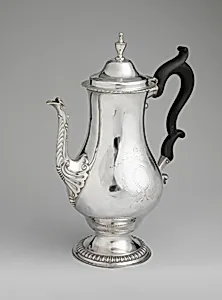
Coffeepot
1780–90
Medium
Silver
Dimensions
Overall: 13 3/16 x 9 13/16 x 5 3/4 in. (33.5 x 24.9 x 14.6 cm); 44 oz. 2 dwt. (1371 g) Foot: Diam. 4 13/16 in. (12.2 cm)
Classification
Coffeepot
Culture
American
Department
The American Wing
Museum
Metropolitan Museum of Art, New York, NY
Credit
Bequest of Alphonso T. Clearwater, 1933
Accession Number
33.120.223
Rights
Public Domain
Art Historical Context
Step into the refined world of early American luxury with Ephraim Brasher's *Coffeepot*, in New York between 1780 and 1790. This impressive silver vessel stands over 13 inches tall, a weight of 44 ounces and a sturdy 4 13/16-inch footed base, designed for both functionality and display. As a product of the post-Revolutionary era, it reflects the rising prosperity of the new nation's merchant class, who commissioned such pieces to furnish their homes with elegance. Brasher, a skilled Manhattan silversmith, exemplifies the craftsmanship of American silverwork during this period. Silver was a prestigious medium, often rivaling European imports in quality, and coffeepots like this one were central to social rituals—serving as conversation starters during gatherings that blended British tea traditions with the American enthusiasm for coffee. The coffeepot's generous proportions and robust form highlight the technical prowess required to shape, hammer, and polish such heavy-gauge silver, marking it as a status symbol for affluent households. Today, this treasure resides in The American Wing of the Metropolitan Museum of Art, thanks to the 1933 bequest of Alphonso T. Clearwater. It offers a tangible glimpse into the birth of American material culture, where everyday objects became canvases for national pride and artistry.