
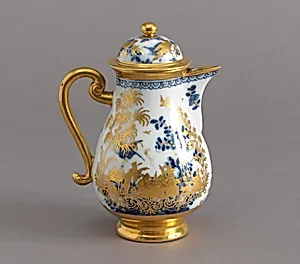
Coffeepot with "Hausmaler" Decor
Medium
ceramics
Classification
ceramics
Department
Smithsonian Collection
Museum
Smithsonian American Art Museum
Credit
Bequest of Erskine Hewitt
Accession Number
1938-57-665-a,b
Rights
Public Domain
About this artwork
Research in Progress
Art Historical Context
This elegant coffeepot from theissen Porcelain Manuf, dating to 1725–1735, early 18th-century German ceramics innovation. Founded in 1710 near Dresden, Meissen was first producer of true hard-paste—a durable, translucent material rivaling prized Chinese imports. The "Hausmaler" decor refers to the work of independent outside decorators, or *Hausmaler*, who undecorated white porcelain blanks from the factory and applied vibrant enamel overglaze paintings. These artists added intricate, personalized motifs, blending factory precision with individual flair. In the Rococo era's dawn, such coffeepots symbolized newfound European coffee culture, inspired by Ottoman influences and exotic trade. Coffee houses proliferated in cities like Vienna and London, making porcelain vessels like this a mark of sophistication and wealth. Meissen's technical mastery—high-fired porcelain vitrified for strength—elevated ceramics from utilitarian to artistic treasure. Now in the Smithsonian American Art Museum via the Bequest of Erskine Hewitt, this piece highlights collaborative artistry and cultural exchange. Though research continues, it invites us to savor the delicate balance of innovation and luxury in everyday luxury. (198 words)