
Coffer lock and key
Unknown Artist
ca. 1680–1700
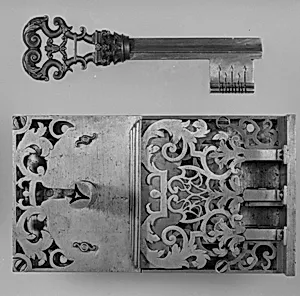
Medium
Steel, iron
Dimensions
Overall (padlock .7a): 6 5/16 × 3 9/16 × 2 in. (16 × 9 × 5.1 cm); Length (key .7b): 5 5/8 in. (14.3 cm)
Classification
Metalwork-Iron
Culture
French
Department
European Sculpture and Decorative Arts
Museum
Metropolitan Museum of Art, New York, NY
Credit
Harris Brisbane Dick Fund, 1957
Accession Number
57.137.7a, b
Rights
Public Domain
Art Historical Context
This exquisite coffer lock and key, in France around 1680–1700, exemplifies the pinnacle of 17th-century ironworking in the realm of European decorative arts. for a coffer—a sturdy chest used to safeguard valuables like documents, jewelry, or coinage—this steel and iron padlock measures a compact 6 5/16 × 3 9/16 × 2 inches, with its matching key at 5 5/8 inches long. Attributed to an unknown artisan, it reflects the era's blend of functionality and fine craftsmanship during the late Baroque period under Louis XIV, when security devices evolved from simple bars to sophisticated mechanisms. The lock's construction highlights advanced metalworking techniques, including forging and precise machining of steel and iron to create durable, tamper-resistant components. Such objects were essential in an age of growing commerce and political intrigue, where protecting wealth was paramount. Its presence in the Metropolitan Museum of Art's European Sculpture and Decorative Arts collection, acquired through the Harris Brisbane Dick Fund in 1957, underscores its status as a rare survivor of everyday luxury metalwork. Visitors will appreciate how this unassuming yet ingenious piece reveals the hidden artistry of locksmiths, turning security into sculptural form. A testament to French ingenuity, it invites us to ponder the treasures it once guarded.