
Coffer or chest key
Unknown Artist
17th century
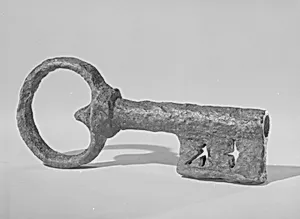
Medium
Wrought iron
Dimensions
Overall: 5 5/8 × 2 3/8 × 1 1/2 in. (14.3 × 6 × 3.8 cm)
Classification
Metalwork-Iron
Culture
probably Northern Italian or possibly German
Department
European Sculpture and Decorative Arts
Museum
Metropolitan Museum of Art, New York, NY
Credit
Gift of Richard S. Perkins, 1975
Accession Number
1975.436.12
Rights
Public Domain
Art Historical Context
This exquisite wrought iron key, likely crafted in the 17th, hails from Northern Italy or possibly Germany, regions renowned for their masterful metalwork during the Baroque era. Designed to secure coffers or chests—vital repositories for valuables like coins, jewels, and documents—it exemplifies the blend of functionality and fine craftsmanship in everyday European life. At just 5⅝ × 2⅜ × 1½ inches, its compact size belies its robust presence, a testament to the era's emphasis on durable, hand-forged hardware amid growing trade and prosperity. Wrought iron, hammered and shaped while hot by skilled blacksmiths, offered unparalleled strength and malleability, making it ideal for keys that needed to withstand daily use and potential tampering. This technique, honed over centuries, allowed for intricate detailing even in utilitarian objects, elevating them to decorative arts status. Housed in the Metropolitan Museum of Art's European Sculpture and Decorative Arts department since a 1975 gift from Richard S. Perkins, it invites us to ponder the hidden artistry in the tools that guarded personal fortunes. Step into the past with this unassuming guardian of secrets— a small iron sentinel from a time when every lock told a story of security and splendor.