
Coin
Unknown Artist
691–692 CE (?)/72 A.H. (?)
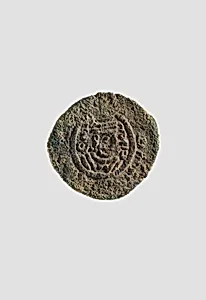
Medium
Bronze
Dimensions
7/8 in. (2.2 cm)
Classification
Metalwork-Coins-Inscribed
Culture & Period
Islamic · early Islamic
Department
Ancient Near Eastern Art
Museum
Metropolitan Museum of Art, New York, NY
Credit
Rogers Fund, 1936
Accession Number
36.30.315
Rights
Public Domain
Art Historical Context
This small bronze coin, measuring just 7/8 inch (2.2 cm) in diameter, hails from the early Islamic period around 691–692 CE (or 72 A.H.), a pivotal time in the Umayyad Caliphate's expansion across the Near East. Minted during the reign of Caliph Abd al-M, it exemplifies the transitional phase of Islamic coinage, bridging Byzantine and Sasanian influences emerging Arab-Islamic designs. As an inscribed metalwork piece, its surface likely bears Arabic script, marking a shift toward aniconic (image-free) currency that emphasized religious phrases like the Islamic testimony of faith, symbolizing the faith's growing cultural and economic dominance. Bronze was a practical choice for these everyday coins, valued for its durability in trade across vast empires from Syria to Persia. Unlike earlier coins with figural imagery, this inscribed example reflects the Umayyads' innovative monetary reforms, promoting unity and Islamic identity without pictorial representations. Acquired through the Rogers Fund in 1936, it now resides in the Metropolitan Museum of Art's Ancient Near Eastern Art department, offering visitors a tangible glimpse into the birth of a global civilization's economy. Its modest size belies its historical weight: such coins facilitated commerce along the Silk Road and beyond, underscoring Islam's early role in interconnecting the ancient world.