
Coin
Unknown Artist
8th–9th century
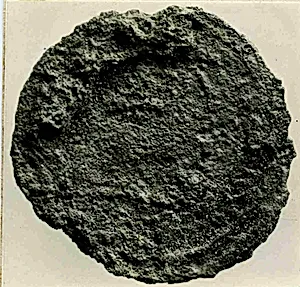
Medium
Copper
Dimensions
Diam. 13/16 in. (2 cm) Thickness. 1/16 in. (0.2 cm) Wt. 26 gr (1.7g)
Classification
Coins
Department
Islamic Art
Museum
Metropolitan Museum of Art, New York, NY
Credit
Rogers Fund, 1939
Accession Number
39.40.127.15
Rights
Public Domain
Art Historical Context
This modest copper coin, dating to the 8th–9th century, hails from the vibrant era of early Islamic civilization, likely during the Abbasid Calate's rise. Measuring just 1316 inch (2 cm) in diameter and a mere 1.7 grams, it exemplifies the practical artistry of numismatics in the Islamic world. Struck from durable copper—a common medium for everyday transactions—these coins facilitated bustling trade routes stretching from Spain to Central Asia, underscoring the economic prowess of medieval Muslim societies. In the Department of Islamic Art at The Metropolitan Museum of Art (acquired via the Rogers Fund in 1939), this artifact highlights the evolution of coinage under Islamic rule. Early designs often borrowed from Byzantine and Sasanian influences before embracing pure Arabic script and aniconic motifs, symbolizing the faith's emphasis on calligraphy and geometry. Such coins served not just as currency but as historical documents, bearing inscriptions of rulers, mints, and dates that chronicled political shifts and cultural unity. Though its specific inscriptions remain unnoted here, this coin invites us to ponder the daily lives of traders, artisans, and caliphs in a golden age of innovation, where even pocket change carried profound cultural weight. A tiny portal to a vast empire!