
Coin
Unknown Artist
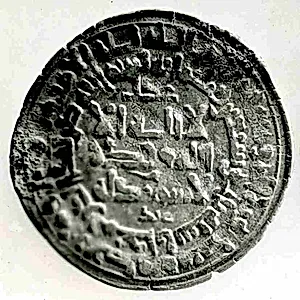
dated A.H. 374/ 983–84 CE
Medium
Silver
Dimensions
Diam. 1 1/4 in. (3.2 cm) D. 1/16 in. (0.1 cm)
Classification
Coins
Department
Islamic Art
Museum
Metropolitan Museum of Art, New York, NY
Credit
Rogers Fund, 1939
Accession Number
39.40.127.61
Rights
Public Domain
Art Historical Context
This exquisite silver coin, minted in A.H. 374 (983–84 CE), offers a tangible glimpse into the thriving Islamic world of the late 10th. Measuring just 1¼ inches in diameter and remarkably thin at 1/16 inch, it exemplifies the precision craftsmanship of medieval Islamic minting. Produced during a period when dynasties like the Buyids held sway over much of the Abbasid realm, such coins circulated widely across vast trade networks from the Middle East to Central Asia, facilitating commerce in spices, silks, and scholarly exchanges. Artistically, Islamic coins like this one prioritize calligraphy over imagery, adhering to aniconic traditions that elevated script as the highest form of decoration. Inscriptions—typically including the ruler's name, mint location, and date—were hammered or die-struck with meticulous detail, turning currency into miniature works of epigraphic art. This coin's survival highlights the durability of silver dirhams, which served not only as money but also as historical records, preserving names and events for posterity. Today, housed in the Metropolitan Museum of Art's Islamic Art department through the Rogers Fund of 1939, it invites us to ponder the interconnectedness of economy, faith, and artistry in medieval Islam—a small object with a big story.