
Coin
Unknown Artist
977–82
Medium
Silver
Classification
Coins
Department
Islamic Art
Museum
Metropolitan Museum of Art, New York, NY
Credit
Rogers Fund, 1939
Accession Number
39.40.127.140
Rights
Public Domain
Art Historical Context
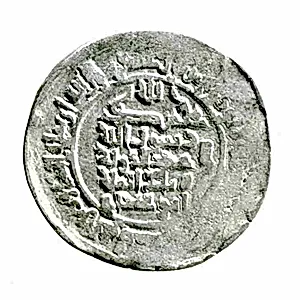
This exquisite silver coin, struck between 977 and 982 CE, hails from the vibrant Islamic world of the late 10th century As part of the Metropolitan Museum of Art's Islamic Art collection, it exemplifies the precision craftsmanship of medieval minting techniques. Crafted from high-quality silver—a prized medium for its durability and portability—this coin likely served as a dirham, the standard silver currency that fueled trade across vast empires from the Mediterranean to Central Asia. During this era, the Abbasid Caliphate's influence waned as regional dynasties like the Buyids in Iran and Iraq or the Samanids in Persia rose to power. Islamic coins avoided figurative imagery in line with aniconic traditions, instead featuring elegant Arabic inscriptions. These often included the ruler's name, religious phrases like the Shahada, and details such as the mint location and Hijri date, turning currency into a canvas for calligraphy and propaganda. Beyond economics, such coins were cultural artifacts, circulating stories of power and piety. Acquired through the Rogers Fund in 1939, this piece invites us to ponder the interconnected Silk Road economies and the artistry of epigraphy that bridged faith, governance, and commerce in medieval Islam.