
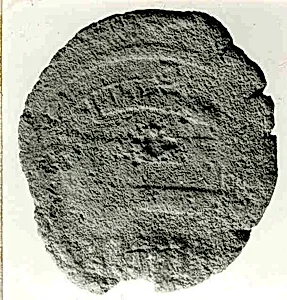
Coin
Unknown Artist
A.H. 174/ 790 CE
Medium
Copper
Classification
Coins
Department
Islamic Art
Museum
Metropolitan Museum of Art, New York, NY
Credit
Rogers Fund, 1939
Accession Number
39.40.127.579
Rights
Public Domain
Art Historical Context
This copper coin, minted in A.H. 174 (790 CE), offers a tangible glimpse into the flourishing Abbasid Caliphate, a golden age of Islamic civilization centered in Baghdad. As a product of the Islamic world, it exemplifies the evolution of coinage under Muslim rule, transitioning from imitations of Byzantine and Sasanian designs to purely Arabic inscriptions. These coins bore essential Islamic phrases, dates, and mint marks, serving not just as currency but as portable declarations of faith and authority. Crafted from durable copper—a common medium for smaller denominations like the fals—this piece highlights the technical prowess of Islamic minting. The metal's affordability facilitated widespread trade across vast empires, from the Mediterranean to India, fueling economic and cultural exchanges. Though the artist remains unknown, the precision of its calligraphy reflects the era's reverence for epigraphy as an art form, blending utility with aesthetic elegance. Today, housed in the Metropolitan Museum of Art's Islamic Art department (acquired via the Rogers Fund in 1939), this coin connects visitors to everyday life in the 8th century, reminding us how money carried the pulse of history.