
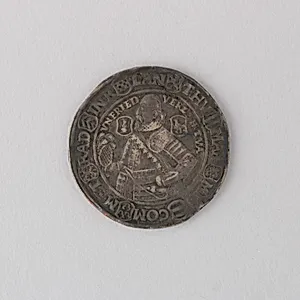
Coin (Thaler) Showing John Casimir and John Ernest
Unknown Artist
dated 1625
Medium
Silver
Dimensions
Diam. 1 3/4 in. (4.5 cm); thickness 1/16 in. (0.2 cm); Wt. 1 oz. (28.3 g)
Classification
Miscellaneous-Coins and Medals
Culture
German, Saxony
Department
Arms and Armor
Museum
Metropolitan Museum of Art, New York, NY
Credit
Gift of Bashford Dean, 1923
Accession Number
23.135.4
Rights
Public Domain
Tags
Art Historical Context
This striking silver Thaler coin, in Saxony, Germany, in 1625, features portraits of John Casimir and John Ernestlikely noble brothers or co-rulers from the region's princely houses. Measuring just 1¾ inches in diameter and weighing one ounce, its modest size belies its role as a substantial unit of currency in the Holy Roman. The Thaler's large format allowed for intricate engraving, showcasing finely detailed profiles, inscriptions, and heraldic symbols that conveyed authority and prestige. Crafted during the early years of the Thirty Years' War (1618–1648), a devastating conflict that ravaged Europe, this coin reflects Saxony's pivotal position as a Protestant electorate navigating alliances and turmoil. Such medals and coins often served dual purposes: as legal tender and as propaganda tools, immortalizing rulers amid political upheaval. The silver medium ensured durability and value, with techniques like die-striking producing sharp, high-relief imagery that highlighted the men's regal attire and features. Now housed in the Metropolitan Museum of Art's Arms and Armor Department (gift of Bashford Dean, 1923), this piece offers a tangible glimpse into 17th-century numismatics and Saxony's turbulent history. Visitors will appreciate its blend of artistry and historical weight—perfect for pondering the faces behind the era's power struggles.