
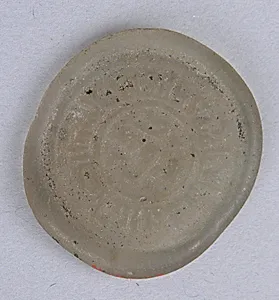
Coin Weight
Unknown Artist
11th century
Medium
Glass
Dimensions
H. 1/8 in. (0.3 cm) Diam. 1 1/8 in. (2.9 cm) Wt. 0.15 oz. (4.25 g)
Classification
Glass
Department
Islamic Art
Museum
Metropolitan Museum of Art, New York, NY
Credit
Museum Accession
Accession Number
x.165.10
Rights
Public Domain
Tags
Art Historical Context
This delicate glass coin weight, dating to the 11th, exemplifies the precision craftsmanship of Islamic artisans during a golden age of trade and commerce. just 1 1/8 inches in diameter and weighing a mere 0.15 ounces, its diminutive size belies its practical purpose: verifying the authenticity and weight of gold or silver dinars and dirhams in bustling marketplaces from Baghdad to Cairo. In the Islamic world, where vast caravan routes like the Silk Road connected East and West, accurate weights and measures were not just tools but symbols of economic trust and Islamic principles of justice, as emphasized in religious texts. Crafted from molded glass—a medium prized for its transparency, durability, and ability to hold fine details—this object highlights advanced glassmaking techniques prevalent in Fatimid or Abbasid workshops. Glass weights were favored over metal for their resistance to corrosion and ease of production in standardized forms, ensuring fair exchange in an era of booming international trade. Though unsigned by a known artist, its survival speaks to the ingenuity of anonymous craftsmen who balanced utility with subtle elegance. Today, at the Metropolitan Museum of Art's Islamic Art department, this unassuming artifact invites us to ponder the invisible threads of history: how everyday objects upheld empires and fostered global connectivity.