
Coin Weight
Unknown Artist
13th–14th century
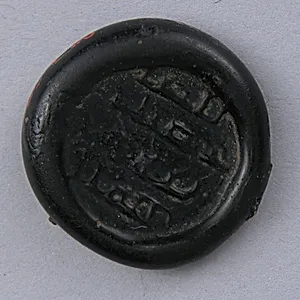
Medium
Glass; stamped
Dimensions
H. 3/16 in. (0.5 cm) Diam. 7/8 in. (2.2 cm) Wt. 0.1 oz. (2.8 g)
Classification
Glass
Department
Islamic Art
Museum
Metropolitan Museum of Art, New York, NY
Credit
Gift of Joseph W. Drexel, 1889
Accession Number
89.2.232
Rights
Public Domain
Tags
Art Historical Context
This delicate glass coin weight, dating to the 13th–14th century, hails from the Islamic world, where precise commerce thrived across vast trade networks from the Middle East to North Africa. Crafted from—a durable, affordable medium ideal for everyday tools—the small disc (just 7/8 inch in diameter and weighing a mere 0.1 oz.) was stamped with official markings to standardize measurements. Such weights ensured the authenticity and exact value of gold dinars and silver dirhams vital in bustling bazaars and long-distance exchanges. Stamped glass weights like this exemplify the sophisticated administrative systems of medieval Islamic societies, which emphasized fair trade and economic stability under caliphates and sultanates. The stamping technique allowed for mass production of uniform tools, reflecting both technical ingenuity and cultural values of justice in measurement (as echoed in Islamic legal traditions). Though tiny, this artifact reveals the hidden infrastructure supporting one of history's great commercial eras. Now part of the Metropolitan Museum of Art's Islamic Art collection—generously gifted by Joseph W. Drexel in 1889—this coin weight invites us to ponder the unsung heroes of ancient economies: objects that balanced scales and built empires.