
Coin Weight
Unknown Artist
probably 11th–12th century
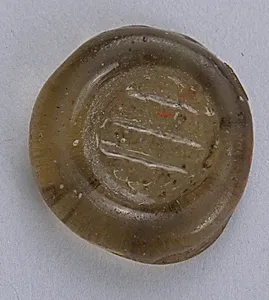
Medium
Glass; stamped
Dimensions
H. 1/4 in. (0.6 cm) Diam. 1 in. (2.5 cm) Wt. 0.2 oz. (5.7 g)
Classification
Glass
Department
Islamic Art
Museum
Metropolitan Museum of Art, New York, NY
Credit
Gift of Joseph W. Drexel, 1889
Accession Number
89.2.238
Rights
Public Domain
Tags
Art Historical Context
This petite glass coin weight, dating to the 11th–12th, offers a glimpse into the meticulous world of medieval Islamic commerce. Crafted in the Islamic world—likely from regions like Egypt or Syria, where such tools were essential for trade—this disc-shaped object measures just 1 inch in diameter and weighs a mere 0.2 ounces. Its stamped surface would have borne inscriptions or designs indicating precise weight standards, ensuring the authenticity and value of gold dinars in bustling markets from Baghdad to Cordoba. Glass was an ideal medium for these weights due to its transparency, allowing merchants to verify contents without damage, while the stamping technique showcased advanced artisanal skills in molding and impressing motifs under heat. Part of the Metropolitan Museum of Art's Islamic Art collection, gifted by Joseph W. Drexel in 1889, it highlights the era's sophisticated systems of weights and measures, which supported the Islamic Golden Age's economic prosperity and cultural exchange. Though small, this artifact embodies the precision and trust that underpinned vast trade networks, reminding us how everyday tools fueled history's grand narratives.