
Coin Weight
Unknown Artist
8th century
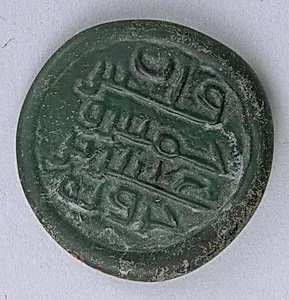
Medium
Glass; stamped
Dimensions
H. 3/16 in. (0.5 cm) Diam. 1 1/4 in. (3.2 cm) Wt. 0.18 oz. (5.1 g)
Classification
Glass
Department
Islamic Art
Museum
Metropolitan Museum of Art, New York, NY
Credit
Gift of Joseph W. Drexel, 1889
Accession Number
89.2.242
Rights
Public Domain
Tags
Art Historical Context
This delicate glass coin weight from the 8th century exemplifies the precision craftsmanship of early Islamic artisans. Measuring just 1¼ inches in diameter and weighing a mere 0.18 ounces, it was designed to verify the exact weight of gold dinars or silver dirhams in bustling trade hubs across the Abbasid Caliphate. Stamped with official markings—likely including inscriptions of rulers or mints—these small objects ensured fair commerce, reflecting Islam's emphasis on honest weights and measures as a moral and economic imperative. Crafted from glass, a favored medium for its affordability and durability compared to metal, the weight showcases advanced stamping techniques. Molten glass was likely poured into molds and impressed with dies while still soft, creating raised designs that withstood daily handling. Such artifacts highlight the Islamic world's sophisticated administrative systems during a golden age of innovation, from Baghdad to beyond. Today, housed in the Metropolitan Museum of Art's Islamic Art department as a gift from Joseph W. Drexel in 1889, this unassuming piece offers a tangible link to medieval marketplaces, reminding us how everyday tools embodied cultural values of justice and ingenuity.