
Coin Weight
Unknown Artist
11th century
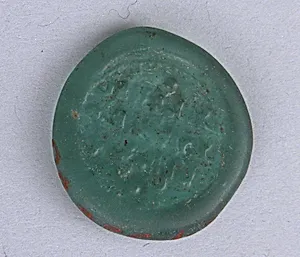
Medium
Glass
Dimensions
H. 3/16 in. (0.5 cm) Diam. 13/16 to 7/8 in. Wt. 0.1 oz. (2.8 g)
Classification
Glass
Department
Islamic Art
Museum
Metropolitan Museum of Art, New York, NY
Credit
Rogers Fund, 1908
Accession Number
08.256.43
Rights
Public Domain
Tags
Art Historical Context
This delicate glass coin weight, dating to the 11th century, hails from the vibrant world of Islamic trade and commerce. Crafted during a golden age of the Abbasidiphate or regional dynasties, such objects were essential tools for merchants verifying the precise weight of gold dinars and silver dirhams. Standing just 3/16 inch tall with a diameter of 1316 to 7/8 inch and weighing a mere 0.1 ounce, its petite scale belies its practical power in ensuring fair exchange across bustling bazaars from Baghdad to Cordoba. Glass was a prized medium in Islamic art, renowned for its transparency and moldability. Artisans employed sophisticated techniques like free-blowing or molding to create these durable, non-corroding weights, often inscribed with Arabic script denoting official standards. This example exemplifies the fusion of utility and craftsmanship, reflecting Islam's emphasis on just measures as a religious and social virtue—echoed in Quranic injunctions against fraud in trade. Today, housed in the Metropolitan Museum of Art's Islamic Art department (Rogers Fund, 1908), it offers a tangible glimpse into medieval economies, where precision in everyday objects underpinned vast networks of cultural exchange.