
Coin Weight
Unknown Artist
11th century
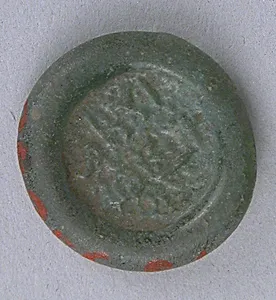
Medium
Glass
Dimensions
H. 1/8 in. (0.3 cm) Diam. 11/16 in. (1.7 cm) Wt. 0.05 oz. (1.4 g) H. 1/8 in. (0.3 cm) Diam. 11/16 in. (1.7 cm) Wt. 0.05 oz. (1.4 g) Diam. 11/16 in. (1.7 cm) Wt.
Classification
Glass
Department
Islamic Art
Museum
Metropolitan Museum of Art, New York, NY
Credit
Rogers Fund, 1908
Accession Number
08.256.54
Rights
Public Domain
Tags
Art Historical Context
This delicate glass coin weight, crafted by an unknown artisan in the 11th, exemplifies the precision engineering of Islamic metrology during the medieval Islamic Golden Age. Measuring just 1/8 inch high and 11/16 inch in diameter, and weighing a mere 0.05 ounces, it was designed to verify the authenticity and mass of gold dinars in bustling trade hubs across the Islamic world. Such tools ensured fair commerce in an era when coin clipping and counterfeiting threatened economic stability, reflecting the caliphates' emphasis on standardized weights and measures. Made of glass—a medium prized in Islamic art for its transparency and moldability—this object highlights advanced glassmaking techniques like pressing or casting into exact forms. The Islamic world's mastery of glass production, from Egypt to Persia, allowed for durable, inexpensive replicas of metal standards, making them accessible for merchants and moneychangers. Housed in the Metropolitan Museum of Art's Department of Islamic Art (Rogers Fund, 1908), this tiny artifact offers a window into everyday ingenuity, where art met utility in supporting vast trade networks from the Mediterranean to India. Its survival underscores the enduring cultural value of precision in Islamic society.