
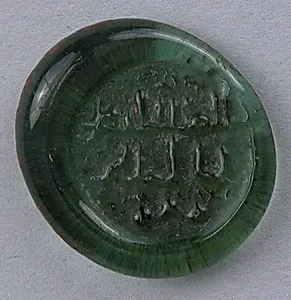
Coin Weight
Unknown Artist
11th century
Medium
Glass
Dimensions
H. 1/8 in. (0.3 cm) W. 11/16 in. (1.7 cm) D. 5/8 in. (1.6 cma) Wt. 0.06 oz. (1.7 g)
Classification
Glass
Department
Islamic Art
Museum
Metropolitan Museum of Art, New York, NY
Credit
Rogers Fund, 1908
Accession Number
08.256.67
Rights
Public Domain
Tags
Art Historical Context
This delicate glass coin weight, dating to the 11th century, exemplifies the precision craftsmanship of the Islamic world. Measuring just 1/8 inch high and weighing a mere 0.06, it was designed for verifying the weight of gold coins like the dinar, ensuring fair trade in bustling medieval markets from North Africa to Central Asia. Housed in the Metropolitan Museum Art's Islamic Art departmentRogers Fund, 1908), it reflects the era's advanced metrology—standardized systems of weights and measures that underpinned a thriving economy. In the Islamic Golden Age, such tools were vital for commerce along the Silk Road and Indian Ocean routes, where merchants demanded accuracy to prevent fraud. Glass, though less common than bronze for weights, highlights the region's mastery of the material; artisans likely molded or cast it to exact specifications, showcasing technical ingenuity. Today, this tiny artifact invites us to marvel at everyday objects that fueled cultural exchange, reminding visitors of the Islamic world's contributions to global trade and science.