
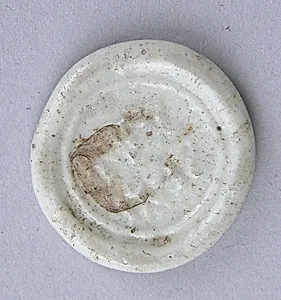
Coin Weight
Unknown Artist
12th century
Medium
Glass
Dimensions
H. 1/8 in. (0.3 cm) Diam. 7/8 in. (2.2 cm) Wt. 0.1 oz. (2.8 g)
Classification
Glass
Department
Islamic Art
Museum
Metropolitan Museum of Art, New York, NY
Credit
Rogers Fund, 1908
Accession Number
08.256.28
Rights
Public Domain
Tags
Art Historical Context
This delicate glass coin weight from the 12th exemplifies the ingenuity of Islamic artisans in everyday functional objects. Measuring just 7/8 inch in diameter and weighing a mere 0.1 ounce, it was designed for precision in trade across the medieval Islamic world, where bustling markets from Baghdad to Cordoba demanded accurate verification of gold coins like the dinar. Housed in the Metropolitan Museum of Art's Islamic department (acquired via the Rogers in 1908), it highlights how even humble tools reflected a society's economic sophistication. Crafted from glass—a medium prized in Islamic culture for its clarity and versatility—this weight was likely molded or cast, showcasing advanced techniques developed during the Golden Age of Islam. Glassmakers employed heat-resistant formulas and intricate molds to produce standardized measures, essential for fair commerce under Sharia principles that emphasized honesty in weights and measures. Beyond utility, such artifacts reveal the cultural value placed on precision and beauty in the mundane. Imagine a merchant in a caravanserai, balancing coins against this tiny disc to ensure trust in transactions— a small object underscoring the vast trade networks that connected East and West.