
Coin Weight
Unknown Artist
13th–14th century
Medium
Glass
Dimensions
H 1/4 in. (0.6 cm) Diam. 1 1/16 in. (2.7 cm) Wt. 0.2 oz. (5.7 g)
Classification
Glass
Department
Islamic Art
Museum
Metropolitan Museum of Art, New York, NY
Credit
Rogers Fund, 1908
Accession Number
08.256.21
Rights
Public Domain
Tags
Art Historical Context
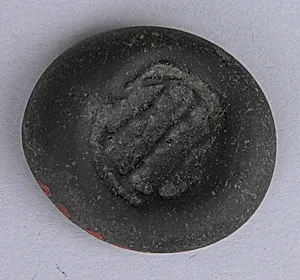
This delicate glass coin weight, dating to the 13th–14th century, hails from the Islamic world and exemplifies the precision craftsmanship of medieval artisans. Measuring just a quarter-inch high and over an inch in diameter, it weighs a mere 0.2 ounces—perfectly suited for verifying the heft of gold dinars or silver dirhams in bustling marketplaces from Baghdad to Cairo. Part of the Metropolitan Museum of Art's Islamic Art collection (acquired via the Rogers Fund in 1908), it highlights everyday tools that supported one of history's great trading empires. In the Islamic Golden Age, standardized weights and measures were not just practical but a cultural and religious imperative, rooted in Quranic calls for honest commerce. Merchants relied on such objects to prevent fraud, ensuring trust across vast networks linking Europe, Africa, and Asia. Glass was an ideal medium—durable, inexpensive to produce, and often molded with inscriptions denoting specific weights—showcasing advanced techniques like mold-blown or pressed glassmaking that flourished in Syrian and Egyptian workshops. Though small, this artifact whispers of grand economic systems, reminding us how tiny tools sustained monumental trade. Visitors, imagine slipping it into a pouch to balance a scale amid the aroma of spices and silks!