
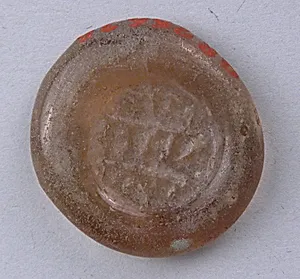
Coin Weight
Unknown Artist
9th–10th century
Medium
Glass
Dimensions
H. 1/4 in. (0.6 cm) Diam. 1 1/8 in. (2.9 cm) Wt. 0.2 oz. (5.7 g)
Classification
Glass
Department
Islamic Art
Museum
Metropolitan Museum of Art, New York, NY
Credit
Rogers Fund, 1908
Accession Number
08.256.26
Rights
Public Domain
Tags
Art Historical Context
This delicate glass coin weight, dating to the 9th–10th century, hails from the Islamic world and exemplifies the precision craftsmanship of early medieval artisans. Measuring just 1 1/8 inches in diameter and weighing a mere 0.2 ounces, it was designed for practical use in trade and commerce, allowing merchants to verify the weight of gold dinars or other coins. Crafted from glass—a medium prized in Islamic art for its transparency and moldability—this small disc reflects the era's advanced glassworking techniques, likely produced through molding or casting in workshops across regions like Syria, Egypt, or Iraq. In the bustling markets of the Abbasid Caliphate, such weights were essential for fair exchange, embodying the Islamic emphasis on honest measurement as outlined in religious and legal texts. Often inscribed (though specifics here are unnoted), they promoted trust in an expanding economy fueled by Silk Road trade. Today, housed in the Metropolitan Museum of Art's Islamic Art department through the Rogers Fund of 1908, this artifact offers a tangible link to daily life, highlighting how everyday tools blended utility with subtle artistry in a golden age of innovation.