
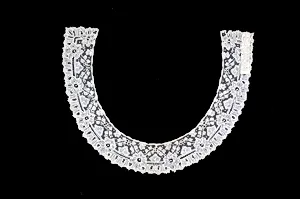
Collar
Unknown Artist
ca. 1860
Medium
Linen
Classification
Collar
Culture
Belgian
Department
Costume Institute
Museum
Metropolitan Museum of Art, New York, NY
Credit
Brooklyn Museum Costume Collection at The Metropolitan Museum of Art, Gift of the Brooklyn Museum, 2009; Ella C. Woodward Memorial Fund, 1932
Accession Number
2009.300.4221
Rights
Public Domain
Art Historical Context
Step into the refined world of mid-19th-century fashion this delicate linen collar, crafted around 1860 by an unknown Belgian artist. As a standout piece from the Costume Institute The Metropolitan Museum of Art, exemplifies the exquisite everyday accessories that defined Victorian-era attire. Belgian craftsmanship during this period was renowned for its in textiles, and this collar—likely worn by women to frame the neckline of dresses—highlights the era's emphasis on modesty, elegance, and detachable elements for practicality. Linen, a lightweight and breathable natural fiber derived from flax, was a prized medium for undergarments and collars, allowing for easy laundering while maintaining crispness. In 1860s Europe, such items reflected broader social norms where high, structured necklines symbolized propriety and status. This collar's survival speaks to the durability of its materials and the cultural value placed on refined personal adornments amid Belgium's thriving textile industry. Today, preserved through the Brooklyn Museum Costume Collection and gifted to the Met in 2009, it offers a tangible glimpse into daily life, reminding us how fashion intertwined with identity and innovation in the 19th century. A subtle yet significant artifact of sartorial history!