
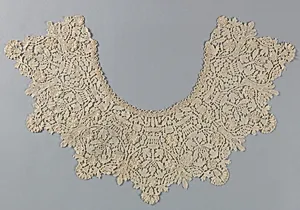
Collar
Unknown Artist
17th century
Medium
Bobbin and needle lace
Dimensions
L. 21 x W. 6 1/2 inches 53.3 x 16.5 cm
Classification
Textiles-Laces
Culture
British or Flemish
Department
European Sculpture and Decorative Arts
Museum
Metropolitan Museum of Art, New York, NY
Credit
Gift of Mrs. Edward S. Harkness, 1930
Accession Number
30.135.141a
Rights
Public Domain
Art Historical Context
This exquisite 17th-century collar, crafted from bobbin and needle lace, exemplifies the of European textile artistry. Measuring 21 by 6½ inches (53.3 x 16.5 cm), its delicate construction blends two masterful techniques: bobbin lace where threads are intricately twisted using small bobbins on a pillow, and needle lace, stitch by stitch with a needle for fluid, sculptural effects. Likely British or Flemish in origin, it hails from a golden age of lace production in Flanders—then a hub of innovation—and reflects the era's fashion for elaborate, detachable collars that framed the face and neck. In the 17th century, such collars were more than accessories; they were symbols of wealth and status, adorning nobility and affluent merchants. The labor-intensive process, often involving skilled women artisans, could take months, showcasing technical virtuosity through fine patterns of scrolls, florals, and geometric motifs that demanded precision and patience. This piece, now in the Metropolitan Museum of Art's European Sculpture and Decorative Arts collection (gift of Mrs. Edward S. Harkness, 1930), preserves a tactile glimpse into Baroque opulence, where lace rivaled painting in expressive detail. Visitors, imagine draping this airy masterpiece over a ruffled doublet—its lightweight elegance a testament to the fusion of utility and high art in everyday luxury.