
Collar
Unknown Artist
1660
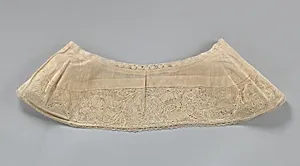
Medium
Bobbin lace
Dimensions
L. 28 x W. 14 1/2 inches (71.1 x 36.8 cm)
Classification
Textiles-Laces
Culture
Flemish
Department
European Sculpture and Decorative Arts
Museum
Metropolitan Museum of Art, New York, NY
Credit
Gift of Mrs. Edward S. Harkness, 1930
Accession Number
30.135.151
Rights
Public Domain
Art Historical Context
Step into the opulent world of 17-century Europe with this exquisite bobbin lace collar, around 1660. Measuring an impressive 28 by 14½ inches, this collar exemplifies the height of lace-making artistry from Flanders, a region renowned for its textile mastery during the Baroque era. Worn by the elite as a symbol of wealth and refinement, such collars adorned the necks of nobility, transforming everyday attire into statements of status amid the lavish courts of Spain, France, and beyond. Bobbin lace, the medium here, is a meticulous technique where dozens of fine linen threads are twisted and intertwined using small bobbins—wooden or bone tools that allow for intricate, geometric patterns and delicate picots (tiny loops). Unlike needle lace, bobbin lace creates a sturdy yet ethereal fabric, prized for its durability and complexity. Flemish artisans from centers like Brussels and Mechelen perfected this craft, exporting it across Europe and fueling a lace mania that influenced fashion from ruffs to elaborate cuffs. A generous gift to The Metropolitan Museum of Art from Mrs. Edward S. Harkness in 1930, this collar preserves a slice of cultural heritage, inviting us to marvel at the unseen labor—hours of skilled handiwork by anonymous makers—that elevated everyday adornment to high art.