
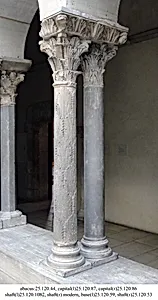
Column Base
Unknown Artist
late 12th century
Medium
Stone
Dimensions
Overall: 6 3/8 x 9 5/8 x 9 5/8 in. (16.2 x 24.4 x 24.4 cm)
Classification
Sculpture-Architectural
Culture
French
Department
The Cloisters
Museum
Metropolitan Museum of Art, New York, NY
Credit
The Cloisters Collection, 1925
Accession Number
25.120.53
Rights
Public Domain
Art Historical Context
This exquisite stone column base, crafted by an unknown French artist in the late 12 century, exemplifies the refined architectural sculpture of medieval Europe. Measuring a modest 6⅜ × 9⅝ × 9⅝ inches, it once supported a column in a grand ecclesiastical structure, such as a church or abbey, during the transition from Romanesque to Gothic styles. Its compact form and durable stone medium highlight the era's masterful stoneworking techniques, where carvers shaped raw material into functional yet decorative elements that bore the weight of soaring vaults. Housed in The Cloisters at the Metropolitan Museum of Art since 1925, this artifact offers a tangible link to France's vibrant monastic culture. In the late 12th century, such bases were integral to cathedrals and cloisters, blending utility with subtle ornamentation—often featuring stylized foliage or geometric motifs that evoked spiritual harmony. Though details of its exact origin remain elusive, its survival speaks to the enduring legacy of medieval craftsmanship. Today, visitors to The Cloisters can appreciate how this unassuming piece captures the ingenuity of builders who transformed stone into the backbone of Gothic innovation, inviting us to imagine the candlelit halls it once graced.