
Column Shaft Part
Unknown Artist
ca. 1130–40
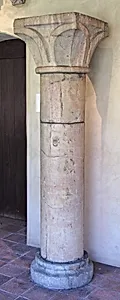
Medium
Marble
Dimensions
Overall: 16 x 14 1/2 in. (40.6 x 36.8 cm)
Classification
Sculpture-Architectural
Culture
Catalan
Department
The Cloisters
Museum
Metropolitan Museum of Art, New York, NY
Credit
The Cloisters Collection, 1925
Accession Number
25.120.1004
Rights
Public Domain
Art Historical Context
This modest yet evocative fragment, known as *Column Shaft Part*, hails from Catalonia around 1130–40, a golden age of Romanesque architecture in medieval Spain. Carved from marble by an unknown artist, this architectural sculpture once formed part of a larger column supporting the vaults of a church or monastery. Measuring just 16 x 14½ inches, it exemplifies the sturdy, functional beauty of Romanesque design, where columns bore the weight of stone roofs while adding subtle sculptural rhythm to sacred spaces. In the context of 12th-century Catalonia, such elements were integral to the region's burgeoning Romanesque style, influenced by pilgrimage routes like the Camino de Santiago. Workshops in places like Ripoll or Roussillon produced these precisely worked shafts, often adorned with geometric patterns or biblical motifs—though this surviving piece speaks to the era's masterful stone carving techniques, achieved through laborious chiseling and polishing of durable marble quarried locally. Today, housed in The Cloisters at the Metropolitan Museum of Art (acquired in 1925), it invites visitors to ponder the anonymous hands behind Catalonia's medieval heritage. A testament to endurance, this fragment bridges the gap between everyday craftsmanship and spiritual architecture, reminding us of the builders who shaped Europe's Gothic precursors.