
Comb
Unknown Artist
1830–49
Medium
tortoiseshell
Classification
Comb
Culture
Argentinean
Department
Costume Institute
Museum
Metropolitan Museum of Art, New York, NY
Credit
Gift of Diana Vreeland, 1978
Accession Number
1978.80
Rights
Public Domain
Tags
Art Historical Context
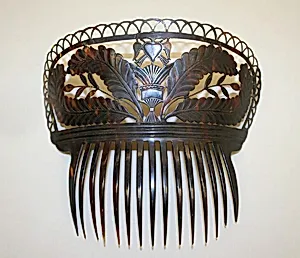
This delicate tortoiseshell, crafted in Argentina between 1830 and 1849, a glimpse into the refined personal adornments of the early 19th century Fashioned from the translucent of the hawksbill sea turtle—a prized material for its warm, amber-like glow and carveability—this comb exemplifies the luxury accessories housed in the Metropolitan Museum of Art's Costume Institute. Its motifs, delicately incised into the surface, evoke the natural beauty of the Argentine pampas, blending functionality subtle artistry. In mid19th-century Argentina, the nation's post-independence fervor and vibrant gaucho culture, such combs were essential for women's hair styling, securing elaborate updos while serving as status symbols. Tortoiseshell's durability and sheen made it ideal for everyday elegance, often hand-carved by skilled artisans using fine tools to achieve intricate patterns without cracking the material. This piece's anonymous creator highlights the anonymous craftsmanship of regional workshops, where natural motifs like leaves symbolized fertility and the land's abundance. A cherished gift to the Met from fashion legend Diana Vreeland in 1978, the comb bridges everyday life and high style, inviting us to appreciate how personal objects carried cultural stories across oceans and eras.