
Comb
Unknown Artist
3rd–7th century
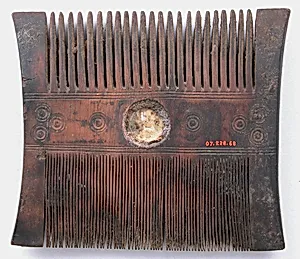
Medium
Wood; incised
Dimensions
H. 3 3/8 in. (8.6 cm) W. 4 in. (10.2 cm) D. 3/8 in. (1 cm) Wt. 2 oz. (56.705 g)
Classification
Wood
Department
Islamic Art
Museum
Metropolitan Museum of Art, New York, NY
Credit
Rogers Fund, 1907
Accession Number
07.228.68
Rights
Public Domain
Art Historical Context
This delicate wooden comb, crafted between the 3rd and 7th centuries, offers a glimpse into everyday life in the early Islamic world. Measuring just 3⅜ inches high and 4 inches wide, its compact size and lightweight design (2 ounces) made it highly portable—ideal for grooming on the go in a nomadic or urban setting. Housed in the Metropolitan Museum of Art Islamic Art Department, it exemplifies the Rogers Fund acquisition of 1907, highlighting the museum's commitment to preserving artifacts from this formative era. The comb's medium—wood incised with fine carvings—reveals sophisticated woodworking techniques prevalent in the pre- and early Islamic Near East. Incising, a method of scratching or cutting designs into the surface, allowed artisans to create intricate patterns without advanced tools, demonstrating resourcefulness and skill with readily available materials. Such objects, though utilitarian, often bore decorative motifs that blurred the line between function and art. Culturally, this comb underscores the artistry embedded in daily tools during a time of cultural transition, from late antiquity to the dawn of Islam. While simple, it reflects the aesthetic sensibilities of communities where even personal items carried subtle elegance, bridging practical needs with emerging Islamic decorative traditions. Visitors can appreciate how such humble pieces illuminate the ingenuity of anonymous makers.