
Comb Morion
Unknown Artist
ca. 1600
Medium
Steel, lead, textile
Dimensions
H. 12 3/8 in. (31.4 cm); W. 8 1/2 in. (21.6 cm); D. 14 7/16 in. (36.7 cm); Wt. 4 lb. (1819 g)
Classification
Helmets
Culture
German
Department
Arms and Armor
Museum
Metropolitan Museum of Art, New York, NY
Credit
Rogers Fund, 1928
Accession Number
28.195.1
Rights
Public Domain
Tags
Art Historical Context
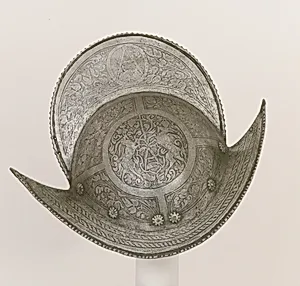
Step into the riveting world of Renaissance warfare with this Comb Morion, a German helmet from around 1600 now housed in the Metropolitan Museum of Art's Arms and Armor Department. Crafted by an artist, this open-faced steel helmet exemplifies the bold, functional designs worn by infantry such as Landsknechts—mercenary pikemen and arquebusiers in the Holy Roman Empire. Its distinctive "comb"—a raised central ridge—provided structural reinforcement while adding a dramatic silhouette, perfect for the battlefields of the early Thirty Years' War era. Made primarily of steel with lead reinforcements and textile lining for comfort, the morion measures just over 12 inches high and weighs a sturdy 4 pounds, balancing protection with mobility. The goat motifs hinted at in its design evoke the rugged symbolism of agility and tenacity, common in Germanic armor decoration. German armorsmiths were masters of such pieces, blending utilitarian forging techniques with subtle artistry to create gear that was both lifesaving and visually striking. Acquired through the Rogers Fund in 1928, this helmet offers a tangible glimpse into Europe's turbulent age of religious wars and professional armies, reminding us how craftsmanship turned steel into survival.