
唐 螺鈿梳背|Comb top
Unknown Artist
8th–9th century
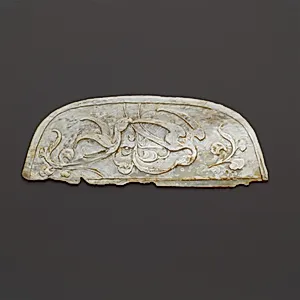
Medium
Mother-of-pearl
Dimensions
L. 4 in. (10.2 cm)
Classification
Jewelry
Culture & Period
China · Tang dynasty (618–907)
Department
Asian Art
Museum
Metropolitan Museum of Art, New York, NY
Credit
Purchase, Jennifer Fill and Christina Weber Gifts, 1990
Accession Number
1990.128
Rights
Public Domain
Tags
Art Historical Context
This exquisite comb top, crafted during China's Tang dynasty (618–907), exemplifies the era's opulent craftsmanship in personal adornments. Made of shimmering mother-of-pear (known as *luodian* in Chinese), it measures just 4 inches long, designed as the decorative back of a woman's hair comb. The iridescent shell inlays, meticulously cut and fitted into a lacquer base create intricate patterns—likely featuring birds, as suggested by its motifs—that catch the light with mesmerizing play. The Tang period was a cosmopolitan golden age, with Silk Road exchanges bringing exotic materials and techniques to Chang'an, the bustling capital. Mother-of-pearl inlay became a hallmark of elite luxury goods, symbolizing wealth and refinement. Women of the aristocracy wore such combs to showcase status, their elaborate hairstyles enhanced by these jewels amid flowing robes and bold makeup. Today, housed in the Metropolitan Museum of Art's Asian Art department, this piece highlights Tang innovation in jewelry, blending functionality with artistry. Its delicate beauty offers a glimpse into the lives of Tang elites, where everyday objects doubled as emblems of cultural splendor.