
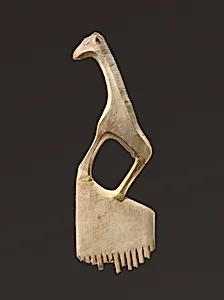
Comb with a giraffe
Unknown Artist
ca. 3900–3500 B.C.
Medium
Ivory (elephant)
Dimensions
h. 18.9 x w. 6.2 x th. 1.1 cm (7 7/16 x 2 7/16 x 7/16 in.)
Classification
Comb, giraffe
Period
Predynastic, Late Naqada l–Naqada II
Department
Egyptian Art
Museum
Metropolitan Museum of Art, New York, NY
Credit
Rogers Fund, 1923
Accession Number
23.2.5
Rights
Public Domain
Tags
Art Historical Context
Step back 5,500 years to Predynastic Egypt, where exquisite "Comb with a Giraffe" was crafted from elephant ivory around 3900–3500 B.C. Measuring just 18.9 cm tall, this delicate tool from the Late Naqada I–Naqada II period blends everyday utility with artistic flair. Carved by an unknown artisan, its slender form features a graceful giraffe motif atop the handle, turning a simple grooming implement into a prestige object. In ancient Egyptian society, ivory combs this were more than cosmetic tools—they signified wealth and status, as elephant ivory was rare and labor-intensive to work. The giraffe, an exotic creature from the savannas, reflects the era's fascination with wildlife, possibly evoking the fertile, animal-rich landscapes of prehistoric Nile Valley life before the dynasties. The artist's technique showcases early mastery of carving: smooth, flowing lines define the animal's long neck and spots, hinting at the sophisticated aesthetics that would evolve into pharaonic art. Today, this treasure resides in the Metropolitan Museum of Art's Egyptian Art Department, thanks to the Rogers Fund of 1923. It offers a glimpse into a time when personal adornment intertwined with symbolic expression, inviting us to ponder the daily lives of Egypt's ancient innovators.