
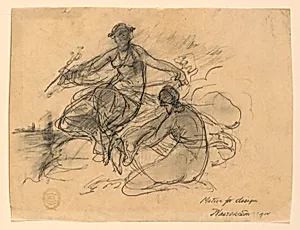
Commerce and Another Allegorical Figure (Motif for Bank Note Design)
Medium
numismatics
Classification
numismatics
Department
Smithsonian Collection
Museum
Smithsonian American Art Museum
Credit
Gift of Mrs. Walter Shirlaw
Accession Number
1912-16-70
Rights
Public Domain
About this artwork
Research in Progress
Art Historical Context
**Commerce and Another Allegorical Figure (Motif for Bank Note Design)** *Walter Shirlaw, American (b. Scotland), ca. 1895* *Numismatics, Smithsonian American Art Museum; Gift of Mrs. Walter Shirlaw* Created around 1895 by Scottish-born American artist Walter Shirlaw (1838–1909), this numismatic design captures the era's fascination with allegory in public art. Shirlaw, known for his illustrative prowess, crafted "Commerce and Another Allegorical Figure" as a motif intended for bank notes—a time when U.S. currency designs often featured symbolic figures to evoke national pride, economic vitality, and moral ideals. Personifications like Commerce, typically depicted with scales, ships, or cornucopias, underscored America's Gilded Age boom, blending artistry with the practical needs of finance. As a numismatic work, this piece highlights the precision required for engraving and printing on currency, where intricate details ensured security and aesthetic appeal. Shirlaw's design reflects the crossover between fine art and commercial illustration, a hallmark of late 19th-century American creativity. Donated by his widow, it preserves a personal legacy within the Smithsonian American Art Museum's collection, inviting us to ponder how everyday money carried profound cultural symbols. Though research continues, this motif reminds visitors of art's role in shaping economic identity—turning transactions into timeless stories. (198 words)