
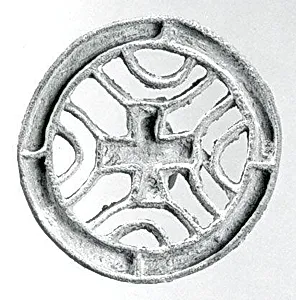
Compartmented stamp seal
Unknown Artist
ca. late 3rd–early 2nd millennium BCE
Medium
Copper alloy
Dimensions
1 15/16 in. (4.9 cm)
Classification
Metalwork-Stamp Seals
Culture & Period
Bactria-Margiana Archaeological Complex · Bronze Age
Department
Ancient Near Eastern Art
Museum
Metropolitan Museum of Art, New York, NY
Credit
Gift of Sheldon Lewis Breitbart, 1983
Accession Number
1983.535.99
Rights
Public Domain
Art Historical Context
This exquisite compartmented stamp seal, from copper alloy around the late 3rd to early 2nd millennium BCE hails from the Bactria-Margiana Archaeological Complex (BMAC)— enigmatic Bronze Age civilization flourishing in ancient Central Asia, along the Oxus River (modern Amu Darya). Measuring just 1 15/16 inches (4.9 cm), its petite size belies its sophisticated design, divided into compartments that likely held symbolic motifs for stamping impressions into soft clay. Stamp seals like this one were vital tools in the BMAC's urban societies, used for sealing documents, goods, and containers to authenticate ownership and prevent tampering—much like a signature in antiquity. The choice of copper alloy highlights the region's advanced metallurgy, blending copper with other metals for durability and a rich patina. These seals reflect a thriving network of trade and administration across steppes and oases, connecting Mesopotamia to the Indus Valley. A generous gift to the Metropolitan Museum of Art from Sheldon Lewis Breitbart in 1983, this artifact offers a tangible glimpse into the BMAC's lost world, where intricate craftsmanship supported complex social structures long before written histories emerged.