
Compote
Unknown Artist
1850–60
Medium
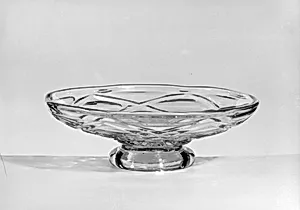
Pressed glass, diamond thumbprint
Dimensions
H. 2 1/2 in. (6.4 cm); Diam. 8 1/8 in. (20.6 cm)
Classification
Compote
Culture
American
Department
The American Wing
Museum
Metropolitan Museum of Art, New York, NY
Credit
Gift of Mrs. Emily Winthrop Miles, 1946
Accession Number
46.140.781
Rights
Public Domain
Art Historical Context
This delicate compote, crafted in America between 1850 and 1860, exemplifies the rise of pressed glass as an accessible luxury in Victorian households. Standing just 2½ inches tall with an 8⅛-inch diameter, its petite form made it ideal for serving sweets, fruits, or nuts at the table. Housed in The Metropolitan Museum of Art's American Wing, it was generously gifted by Mrs. Emilythrop Miles in 194, preserving a slice of everyday elegance from the pre-Civil War era. standout feature is its "diamond thumbprint" pattern, a textured motif pressed into the molten glass during manufacturing. This technique, pioneered in the United States in the early 19th century, allowed for intricate designs without the high cost of hand-blown glass. Machines forced the glass into molds, creating uniform, sparkling facets that mimicked fine cut crystal—democratizing beauty for the growing middle class. Culturally, such compotes reflected American innovation and optimism, blending utility with ornamentation. They graced parlors and dining rooms, symbolizing hospitality and refinement amid rapid industrialization. Though by an unknown artisan, this piece whispers of the skilled glassworks thriving in New England and the Midwest, offering visitors a tangible link to 19th-century domestic life.