
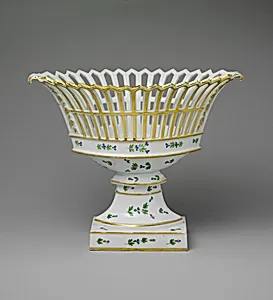
Compote
Unknown Artist
1815–30
Medium
Porcelain
Dimensions
11 3/8 x 14 1/4 x 7 3/8 in. (28.9 x 36.2 x 18.7 cm)
Classification
Compote
Culture
French
Department
The American Wing
Museum
Metropolitan Museum of Art, New York, NY
Credit
Gift of Mrs. Alan W. Carrick, 1967
Accession Number
Inst.67.15.1
Rights
Public Domain
Art Historical Context
This elegant porcelain compote, crafted in France between 1815 and1830, exemplifies the luxury tableware produced during the Restoration and early July Monarchy periods. Following the Napoleonic Wars, French porcelain factories like Sèvres flourished, creating ornate vessels such as this pedestal bowl—ideal for displaying fruits, sweets, or confections at grand dinners. Standing at 11 3/8 x 14 1/4 x 7 3/8 inches, its generous scale and delicate material highlight the technical mastery of hard-paste porcelain, fired at high temperatures for translucency and durability. Though the artist remains unknown, the compote reflects France's cultural dominance in decorative arts, where such pieces symbolized wealth and sophistication. Imported to America, it entered The Metropolitan Museum of Art's American Wing through the generous gift of Mrs. Alan W. Carrick in 1967, underscoring transatlantic admiration for French craftsmanship amid growing U.S. prosperity in the 19th century. Visitors will appreciate its subtle curves and poised form, a testament to the era's blend of neoclassical elegance and emerging romantic flourish—perfect for evoking the opulence of a bygone salon.