
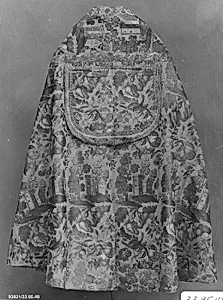
Cope
Unknown Artist
ca. 1735
Medium
Silk
Dimensions
10 ft. 1 in. × 58 in. (307.3 × 147.3 cm)
Classification
Textiles-Woven|Textiles-Ecclesiastical
Culture
Italian, probably Venice
Department
European Sculpture and Decorative Arts
Museum
Metropolitan Museum of Art, New York, NY
Credit
Gift of Kate Read Blacque, in memory of her husband, Valentine Alexander Blacque, 1933
Accession Number
33.95.48
Rights
Public Domain
Tags
Art Historical Context
This magnificent silk cope, dating to around 1735 and likely woven in Venice, Italy, exemplifies the opulent textile artistry of the Venetian Renaissance's twilight. Measuring an impressive 10 feet long by nearly 5 feet wide, it was designed as a liturgical vestment cope, or semicircular mantle worn by clergy during processions and solemn Masses. Venice's silk workshops were world-renowned for their luxurious brocades, blending Eastern influences with European flair, and this piece reflects that tradition through its intricate woven patterns of flowers, leaves, and trees, evoking a lush, paradisiacal garden. As an ecclesiastical textile, the cope held profound cultural and religious importance in 18th-century Catholic Europe, adorning priests to symbolize divine splendor during rituals. The shimmering silk, dyed in rich hues and woven with metallic threads (inferred from period techniques), would have caught candlelight in grand cathedrals, enhancing the sensory drama of Baroque worship. Though the artist remains unknown, the work showcases masterful loom craftsmanship, where motifs were integrated directly into the fabric for durability and brilliance. Gifted to the Metropolitan Museum of Art in 1933 by Kate Read Blacque in memory of her husband, this cope offers visitors a tactile glimpse into Venice's textile legacy—a city where silk trade fueled artistic innovation amid declining republics. Marvel at its scale and detail, a testament to faith woven in thread.