
Cope
Unknown Artist
early 16th century
Medium
Silk & metal thread
Dimensions
Overall: 52 x 101 1/2in. (132.1 x 257.8cm)
Classification
Textiles-Costumes-Ecclesiastical
Culture
British
Department
The Cloisters
Museum
Metropolitan Museum of Art, New York, NY
Credit
The Cloisters Collection, 1953
Accession Number
53.63.1
Rights
Public Domain
Art Historical Context
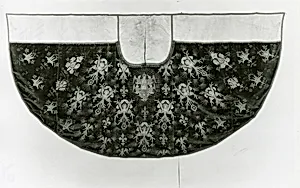
Step into the opulent world of early 16th-century British ecclesiastical art with this magnificent *Cope*, a semicircular mantle worn by clergy during solemn processions and Masses. Crafted from luxurious silk woven with shimmering metal threads—likely gold and silver for a radiant effect—this vestment exemplifies the exquisite textile traditions of Tudor England. Measuring an impressive 52 x 101½ inches (132.1 x 257.8 cm), its sweeping scale allowed it to drape dramatically over the shoulders, creating a visual spectacle in candlelit cathedrals. Produced by an unknown artist, the cope highlights the mastery of English embroidery, a craft renowned for its intricate techniques and symbolic richness. Metal threads added not just beauty but a sense of divine splendor, reflecting the era's blend of medieval piety and emerging Renaissance ornamentation. Such vestments were commissioned for high church officials, underscoring the Church's role as a patron of fine arts amid Reformation tensions. Now housed in The Cloisters at the Metropolitan Museum of Art (The Cloisters Collection, 1953), this rare survivor invites us to appreciate the tactile artistry of Britain's medieval legacy. Imagine its gleam under Gothic arches—a testament to faith, skill, and splendor that has endured five centuries.