
Coptic Manuscript
Unknown Artist
3rd–12th century
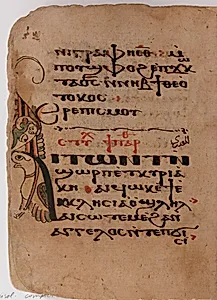
Medium
Red, black, and green ink on paper
Dimensions
H. 6 3/4 in. (17.1 cm) W. 5 1/8 in. (13 cm)
Classification
Codices
Department
Islamic Art
Museum
Metropolitan Museum of Art, New York, NY
Credit
Rogers Fund, 1919
Accession Number
19.196.4
Rights
Public Domain
Art Historical Context
Step into the ancient world with this exquisite *Coptic Manuscript*, a rare survivor from Egypt's Christian heritage spanning the 3rd to 12th centuries. Crafted by an unknown artist using vibrant red, black, and green inks on paper, this compact codex measures just 6 3/4 by 5 1/8 inches—perfectly portable for personal devotion or liturgical use. Housed in the Metropolitan Museum of Art's Department of Islamic Art and acquired through the Rogers Fund in 1919, it exemplifies the enduring Coptic tradition amid Egypt's cultural transitions. Coptic codices like this one represent a pivotal innovation in bookmaking: folded sheets bound into quires, predating widespread European use of the format. The choice of paper, introduced later in the region's history, and the multicolored inks hint at decorative illumination, blending practicality with artistry. These manuscripts often contained sacred texts in the Coptic language, a script derived from Greek and Demotic, preserving Christian scriptures and hymns during a time when Egypt bridged late antiquity and the Islamic era. This artifact whispers of resilience—Coptic Christians maintained their vivid visual and textual traditions for nearly a millennium. Marvel at its delicate scale and colors, a testament to the ingenuity of early book artisans.