
Cornflower Pendant
Unknown Artist
ca. 1390–1352 B.C.
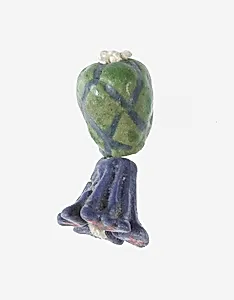
Medium
Faience
Dimensions
L. 1.7 cm (11/16 in)
Classification
Pendant, composite cornflower
Period
New Kingdom
Department
Egyptian Art
Museum
Metropolitan Museum of Art, New York, NY
Credit
Rogers Fund, 1911
Accession Number
11.215.280
Rights
Public Domain
Tags
Art Historical Context
This delicate Cornflower Pendant, crafted around 1390–1352 B.C. during Egypt's New Kingdom (Dynasty 18), exemplifies the exquisite jewelry of the era. Measuring just 1.7 cm long, this tiny faience piece likely adorned a necklace or bracelet, reflecting the ancient Egyptians' love for floral motifs that evoked the beauty and life-giving power of the Nile. The New Kingdom marked a golden age of prosperity and artistic innovation under pharaohs like Amenhotep III and Akhenaten, when such personal ornaments were worn by people across social classes for both adornment and protection. Faience, a glazed ceramic composite of crushed quartz, lime, and copper pigments, was prized for its vibrant turquoise-blue hue mimicking precious lapis lazuli—too costly for everyday use. Artisans molded and fired it to create a glassy, durable surface, making it ideal for intricate small-scale works like this pendant. The cornflower design, a stylized bloom common in Egyptian art, symbolized renewal and fertility, often linked to rebirth in the afterlife. Acquired through the Rogers Fund in 1911 and now in the Metropolitan Museum of Art's Egyptian Art collection, this pendant offers a glimpse into daily spiritual life, reminding us how even the smallest artifacts carried profound cultural weight.