
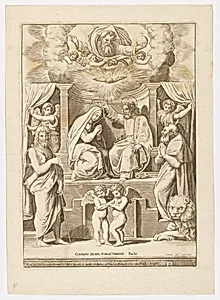
Coronation of the Virgin
Classification
religion
Department
Smithsonian Collection
Museum
Smithsonian American Art Museum
Credit
Museum purchase through gift of various donors and from Eleanor G. Hewitt Fund
Accession Number
1938-88-8791
Rights
Public Domain
About this artwork
Research in Progress
Art Historical Context
### Coronation of the Virgin Step into the divine realm with *Coronation of the Virgin*, a captivating religious artwork created by the Master of the Die, an artist active between 153 and 1560. Italian or German, this enigmatic figure belongs to a tradition of "Masters" named after distinctive works, evoking the vibrant artistic exchanges across Renaissance Europe. The title reveals a timeless Christian iconography: the Virgin Mary receiving her heavenly crown, often from Christ or the Father, symbolizing her exalted role as Queen of Heaven—a motif that inspired countless painters from the Middle Ages through the Baroque. Crafted amid the 16th century's cultural upheavals, including the Reformation's religious tensions, the piece reflects enduring Catholic devotion in an era of artistic innovation. Though the medium remains under study, its classification as religious art underscores the period's emphasis on spiritual narratives, blending humanism with piety. Northern European influences, if German, might infuse it with meticulous detail, while Italian roots could highlight graceful forms. Now in the Smithsonian American Art Museum, acquired through museum purchases and the Eleanor G. Hewitt Fund, this work invites reflection on anonymous talents who shaped visual faith. As research progresses, it promises deeper revelations about its techniques and context, reminding us of art's power to elevate the soul. (198 words)