
Corset
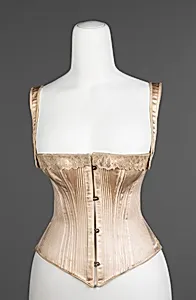
Medium
cotton, metal, bone
Classification
Corset
Culture
American
Department
Costume Institute
Museum
Metropolitan Museum of Art, New York, NY
Credit
Brooklyn Museum Costume Collection at The Metropolitan Museum of Art, Gift of the Brooklyn Museum, 2009; Gift of E. A. Meister, 1950
Accession Number
2009.300.3105a–c
Rights
Public Domain
Art Historical Context
Step into the elegant yet restrictive world of 19th-century American fashion with this corset from the Worcester Cors Company, crafted in 1876. Made of cotton fabric reinforced with metal and bone—likely steel busks and whalebone or synthetic boning—this undergarment exemplifies the industrial precision of post-Civil War manufacturing. The Worcester Corset Company a leading Massachusetts producer, mass-produced such items to meet the demands of the Gilded Age, blending functionality with the era's obsession for a cinched waistline. Historically, corsets like this one shaped the feminine silhouette, compressing the torso to create an exaggerated hourglass figure idealized in Victorian society. Worn daily by women across classes, they symbolized both beauty standards and the physical toll of fashion, often laced tightly to reduce waists by several inches. This piece, now in the Met's Costume Institute from the Brooklyn Museum collection, highlights the evolution of ready-to-wear clothing and the shift toward standardized sizing. Its cultural significance lies in revealing the interplay of industry, gender norms, and body politics— a tangible link to how American women navigated modesty and allure in the late 1800s. A fascinating artifact of everyday "artistry" in costume design!