
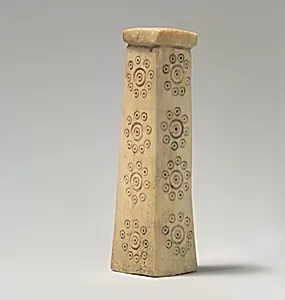
Cosmetic container (?)
Unknown Artist
ca. 9th century BCE
Medium
Bone
Dimensions
3.39 x 0.98 in. (8.61 x 2.49 cm)
Classification
Ivory/Bone-Implements
Culture & Period
Iran · Iron Age II, Hasanlu Period IV
Department
Ancient Near Eastern Art
Museum
Metropolitan Museum of Art, New York, NY
Credit
Rogers Fund, 1960
Accession Number
60.20.27
Rights
Public Domain
Art Historical Context
This delicate bone object, possibly a cosmetic container, hails from ancient Iran during the Iron Age II, specifically the Hasanlu Period IV the 9th century. Measuring just 3.39 x 0.98 inches, its petite size suggests it was a personal item, likely carried daily for storing unguents, kohl, or other beauty aids. Discovered at the Hasanlu site in northwest Iran it offers a glimpse into the material culture of a vibrant period marked by emerging iron technology and complex societies in the Ancient Near East. Crafted from bone—a readily available, workable medium—the artifact showcases the skilled carving techniques of anonymous artisans. Bone implements like this were prized for their durability and fine polishability, allowing intricate shapes that mimicked more luxurious ivory. Its classification among ivory/bone tools underscores everyday utility blended with subtle artistry, reflecting a society where personal grooming held cultural value. Acquired through the Rogers Fund in 1960, this piece now resides in the Metropolitan Museum of Art's Ancient Near Eastern Art department. It invites us to ponder the lives of Iron Age Iranians: who held it, what scents it once contained? Such humble objects illuminate the human stories behind grand historical shifts.