
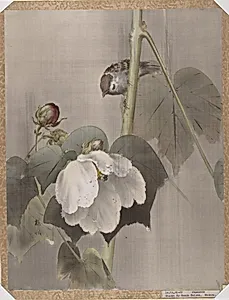
Cotton Rose Mallows in the Rain
ca. 1891–92
Medium
Album leaf; ink and color on silk
Dimensions
14 3/4 x 11 1/2 in. (37.5 x 29.2 cm)
Classification
Paintings
Culture & Period
Japan · Meiji period (1868–1912)
Department
Asian Art
Museum
Metropolitan Museum of Art, New York, NY
Credit
Charles Stewart Smith Collection, Gift of Mrs. Charles Stewart Smith, Charles Stewart Smith Jr., and Howard Caswell Smith, in memory of Charles Stewart Smith, 1914
Accession Number
14.76.61.69
Rights
Public Domain
Tags
Art Historical Context
**Cotton Rose Mallows the Rain** by Okada Baison, created around 1891–92, captures the delicate beauty of nature in a classic Japanese album leaf format. Measuring 14¾ x 11½ inches, this intimate ink and color on silk painting hails from the Meiji period (186–1912), a era when Japan balanced rapid modernization with cherished artistic traditions. Baison, skilled painter of birds and flowers, renders cotton rose mallows—flowers known for their soft, shifting petals—bathed in gentle rain, accompanied by birds perched amid the blooms, evoking a serene, poetic moment. The album leaf medium, designed for personal albums or collectors, highlights the precision of ink washes and subtle color layering on silk, allowing for luminous effects that mimic dew-kissed petals and misty air. This technique underscores the literati influence in Japanese painting, emphasizing harmony between artist, nature, and viewer. Presented in The Metropolitan Museum of Art's Asian Art Department from the Charles Stewart Smith Collection, this work reflects Meiji Japan's cultural resilience, preserving floral motifs symbolizing transience and beauty amid societal change. A perfect gem for contemplating nature's quiet poetry. (198 words)