
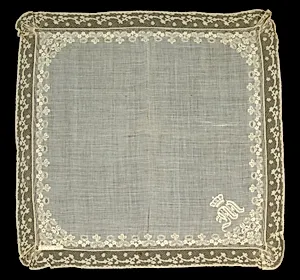
Court presentation handkerchief
Unknown Artist
1840–60
Medium
Linen
Classification
Court Presentation Handkerchief
Culture
Belgian
Department
Costume Institute
Museum
Metropolitan Museum of Art, New York, NY
Credit
Brooklyn Museum Costume Collection at The Metropolitan Museum of Art, Gift of the Brooklyn Museum, 2009; Gift of the estate of Margaret M. Cullen, 1934
Accession Number
2009.300.4260
Rights
Public Domain
Art Historical Context
Step into the refined world of mid-19th-century Belgian high society with this exquisite *Court presentation handkerchief*, crafted between 1840 and 1860. As a formal accessory reserved for elite occasions like royal court presentations, it embodies the era's emphasis on understated luxury and impeccable etiquette. Handkerchiefs like this were essential for women of nobility, serving not just as practical items but as symbols of status, often carried during formal audiences with King Leopold I or at grand balls. Made of fine linen—a prized natural fiber known for its durability, breathability, and ability to hold intricate embroidery—this piece highlights the technical mastery of Belgian textile artisans. Linen's crisp texture made it ideal for delicate lacework or hemstitching, techniques that showcased a maker's skill without ostentation, aligning with Victorian ideals of restrained opulence. Though the artist remains unknown, the handkerchief reflects Belgium's burgeoning textile industry, fueled by its flax-rich regions like Flanders. Today, housed in the Costume Institute at The Metropolitan Museum of Art (gift of the Brooklyn Museum Costume Collection), it offers a tactile glimpse into the intimate rituals of courtly life, reminding us how everyday objects carried profound social weight.