
Court Robe (Hōyeki-Hō)
Unknown Artist
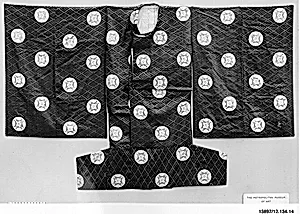
Medium
Silk; gold / Brocaded
Dimensions
50 x 85 in. (127 x 215.90 cm)
Classification
Textiles-Costumes
Culture & Period
Japan · Edo period (1615–1868)
Department
Asian Art
Museum
Metropolitan Museum of Art, New York, NY
Credit
Rogers Fund, 1912
Accession Number
12.134.14
Rights
Public Domain
Art Historical Context
This magnificent Court Robe, known as a *Hōyeki-Hō*, hails from Japan's Edo period (16151868), an era of relative peace under the Tokugawa shogunate when elaborate textiles symbolized social status and imperial refinement. Worn by high-ranking court nobles or officials, such robes were essential for ceremonial occasions, reflecting the rigid hierarchy of feudal society. Measuring an impressive 50 x 85 inches (127 x 215.90 cm), its generous proportions accommodated layered traditional garments, enveloping the wearer in a cascade of opulent fabric. Crafted from luxurious silk brocaded with gold threads, the robe showcases masterful weaving techniques where metallic filaments are integrated during the loom process to create shimmering, raised patterns. This labor-intensive method, prized in Edo-era Japan, elevated textiles to high art, blending functionality with aesthetic splendor. The gold accents not only caught the light in candlelit palaces but also evoked imperial prestige, underscoring the wearer's proximity to power. Acquired through the Rogers Fund in 1912 and now housed in the Metropolitan Museum of Art's Asian Art Department, this anonymous masterpiece offers a tactile glimpse into Japan's sartorial heritage, where every thread wove stories of tradition and elegance.